
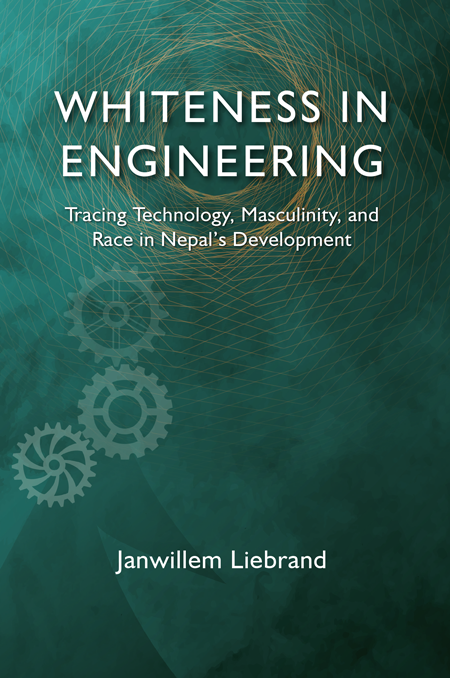
Whiteness in Engineering
Tracing Technology, Masculinity, and Race in Nepal’s Development
₨ 1,250
Based on the strong impressions formed ...read more
Additional information
- Weight: 200 g
-
Language:
English
- Year of Publishing : 2022
Description
Whiteness in Engineering: Tracing Technology, Masculinity, and Race in Nepal’s Development
Janwillem Liebrand
2022, xxvi+230
This book should be required reading in all engineering colleges of South Asia.
— Dipak Gyawali
Based on the strong impressions formed during his training as an engineer in the Netherlands and subsequent entry into the world of technology research in South Asia, Whiteness in Engineering retraces Janwillem Liebrand’s intellectual journey that revealed to him the connections between technology, masculinity and race in Nepal’s history of planned development. He constructs five dioramas to present different viewpoints on everyday engineering practices in the field of irrigation and water resources development. Together these dioramas permit readers to discern for themselves why it is that engineering has failed to fight for social and intellectual transformation and also why expert-led technology promotion in achieving global sustainability goals has come to reinforce—rather than challenge—the dynamics of gender discrimination, social exclusion, and male hegemony in society.
_____________________________________________________________________________________________________________
Janwillem Liebrand is trained as an irrigation engineer and a social scientist. Since 2018, he has been working as an Assistant Professor at the International Development Studies group, Department of Human Geography and Spatial Planning, Faculty of Geosciences, Utrecht University, the Netherlands. His research focusses on the practices and politics of land and water management, food security, and the role of science and technology expertise in promoting development interventions. Central to his work is the recognition of the implicit politics of race and gender that is part of foreign aid and international development cooperation. His work includes studies on the promotion of policy models for urban drinking water privatisation, land and water reforms, drip irrigation, participatory water management, and food security as well as studies on the professional performance of water experts and masculinities among them, and how they—and their expertise and the policy models they promote—interact with processes like citizen-led urban delta management and farmer-led irrigation development. He has contributed as a co-author to the Hindu Kush Himalayan Monitoring and Assessment Programme (HIMAP), and his latest research is on decolonising communication in food security innovations in Sub-Saharan Africa—towards sustainable and fair policies and interventions.
Only logged in customers who have purchased this product may leave a review.
Related products
-
-
 ₨ 650 Add to cart
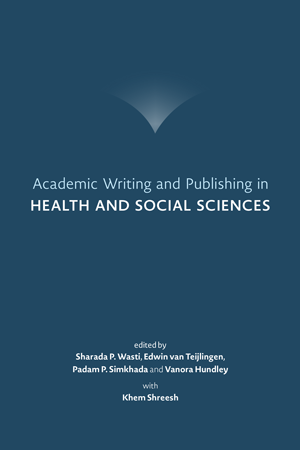
Academic Writing and Publishing in Health and Social Sciences
Sharada P. Wasti, Edwin van Teijlingen, Padam P. Simkhada and Vanora Hundley with Khem Shreesh -
-
 ₨ 990 Add to cart
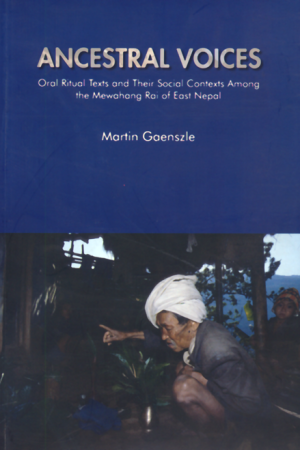
Ancestral Voices
Oral Ritual Texts and Their Social Contexts Among the Mewahang Rai of East Nepal
Martin Gaenszle
Reviews
There are no reviews yet.